Below is the series of slides I used for a talk exploring what's happening in the world today and what's emerging in the near future.... enjoy!
|
Many of the people I work with or who would read my website do not understand what's happening to the United States. They can't understand what people are thinking, how the current President got elected, or why the people around him aren't stopping him. CLICK HERE to read a remarkable article written by a woman who's been studying the American working class for years. 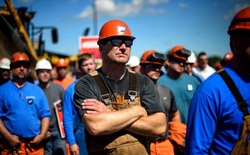 And I have my own ideas, written about 20 years ago but very relevant today... Classes and Value Systems in the United States Clearly, there are vast differences between the members of the different classes in this country. However, the US being the “land of opportunity” where we can all move wherever we please and learn whatever we choose, class is not a hereditary nor location-based division. Distinctions can't be made simply by income, either, because ministers, for example, generally make about the same income as fast-food workers and far less money than assembly-line workers, but live and vote and consume in very different ways. A class model of American culture must address the different ways of thinking and working that divide the American people, and starts with the division between abstract thinkers and concrete thinkers. In spite of all the sociological demographic measures, in truth, how people make a living is the next defining characteristic; the values on which their actions are based provides the final filter. Abstract and Concrete Thinking Consider: some people think in terms of their experiences and the things they can see, hear, touch, taste, and smell; they ask questions about objects, events, people, and procedures. Others think in terms of possibilities and principles; they ask questions that apply ideas in lots of different ways. Some people think in terms of specific how-to steps; they read the instruction book or do things they way they were told because each task is different. Others think in terms of relationships and patterns; they see how something they’ve done before is similar to what is being done now and use the same methods as far as they can—typically before reading the instructions. People in the first group are called concrete thinkers. They tend to experience the world as a series of separate, discrete objects and events, and learn by experience working with objects, or by seeing or hearing concrete examples. Once they learn how something is done, that’s the only “right” way to do it. People in the second group are called abstract thinkers. They’re constantly generalizing from events and experiences and relating or connecting them to others, and experience the world as an unfolding set of more and more complex interactions hoping to find a few basic principles that apply to everything. All humans generalize, but for abstract thinkers, it’s the only way to operate. Once they see how something has been done, they look for ways to do it better, more efficiently, more beautifully, or in a way that's simply more fun. Given the difference between these two ways of thinking, is it any wonder that the past thousand years1 have seen almost constant conflicts between, as my grandmother used to say, “Town & Gown”? The Townies, the sons of tradesmen and artisans, live by their ability to manipulate concrete objects. The Gownies, the black-robed students and instructors in the college or university (who used to wear their robes all the time but now only wear them at commencement), live by their ability to grasp and manipulate abstract ideas. Neither understands nor places much value on the other, and both feel a little defensive of their limitations. Well into the 19th century, they lived side by side, the tradesmen selling goods to the intelligencia and the intelligencia providing basic moral, religious, and ethical training to their children. This went on for generation after generation, in a usually uncomfortable dynamic tension, often divided by the walls of the university campus so the boys from the different groups wouldn't taunt and fight with each other.  Working With Head or Hands It's not just how we think that defines (and too often divides) us; it's also what we do. In fact, for most Americans, “what do you do for a living?” is the first question we ask when we're getting to know someone. For the purposes of this model, I've divided “what we do” into 2 main classes: we either work with our hands – building, creating, fixing, moving, cleaning, or in some other way manipulating material stuff – or we work with our heads – calculating, exploring, investigating, analyzing, developing, designing, or projecting future states, of ideas and relationships. People who rely on Concrete Thinking and working with the hands have been the foundation for Industrial Culture. They are the Laborers, Marx's Proletariat, modern America's "White Working Class", “red neck,” or “Joe the Plumber”. A few are day-laborers, living on the fringes of the culture, often immigrants, consuming little and rarely saying anything in the voting place; those few are called here “T-shirts”. The vast majority, though, are the Blue (men) or Pink (women) Collar workers whose parents and grandparents were the same. They work the factories and construction sites, staff the stores and restaurants, provide the support for hospitals, hotels, schools, and churches, and keep the corporations functioning. Some of them work on farms or in the lumber, fishing, and mining industries, in daily contact with natural processes and resources. For people in these classes, the world is made up of objects to be used, manipulated, or modified to suit one's immediate life purpose. Trees, for example, are objects that may be good for shade, but not if they block a desired view or drop too many leaves or fruit in the wrong place; then they're simply objects to be eliminated. The T-shirt or Blue Collar worker will go out and, with or without the help of friends, do whatever it takes to get rid of it, perhaps cutting up a load of firewood in the process. The Shift to Management – Working With the Head When the Concrete-thinking worker begins to be seen as a leader, or comments on patterns and relationships in the work being done, a promotion to manager usually takes place. Suddenly the Blue Collar worker is a White Collar businessman. They're now the manager or owner of a plumbing, construction, or electrical company, the factory-floor supervisor who's been “moved upstairs”, or the effective sales person who's now sales manager. White Collars are also the professionals – they may be a pharmacist, optometrist, engineer, lawyer, dentist, or physician – who once would have learned their trade as apprentices and worked their way up to owning a business, or might have been trained on top of a liberal-arts education, but most of whom today have earned a technical degree and gone straight into the position - a fact which makes the professional suspect to the working-his-way-up Blue Collar. To White Collars, however the got there, an undesirable tree remains an object to be eliminated, but the White Collar will pay someone to cut it down and haul it away rather than do it himself or with the help of friends or family. 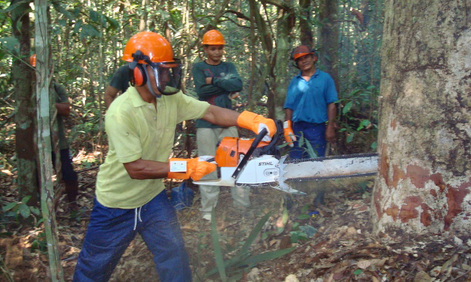 Regardless of whether they rise up through the ranks or step into the position straight out of school, both Blue/Pink and White Collars have the training to do their job well. Problems arise though, because they too often lack the broader knowledge-base that can help them think about the process, its context, and its consequences, rather than simply do the work. No longer able to put in a day's work and go home, managers need to keep up with the finances and staffing, and be responsible for how others do the job, as well as taking the long view. As a result, the shift from Blue Collar to White Collar is difficult for many, and often leads to addictive behaviors as the conflict between ways of thinking takes its toll. The addictions may include alcohol, nicotine, and drugs, or may be more subtle: acquisition of possessions, unhealthy sexual behaviors, abuse of food, or even excessive exercise. And the income for White Collars being the highest in the country, the resources are usually there to support the addiction. Becoming a Power-Broker When the White Collar manager or business owner reaches a certain level of income and power, another shift takes place. Now people are asking for advice and funds outside of the business. Now there are events in the community that must be attended to maintain that level of income and power. And those events are not made up of people from either the Blue/Pink Collar class nor even mostly of other members of the White Collar class. No, this level of power and income belongs to a whole new class: people who do business during formal dinners and receptions, who attend inaugurations of mayors, governors, and presidents – and often help pay for the celebrations that follow – wearing formal attire as they do their work at these events: they are the Tuxedo class. Again, it's a difficult transition. Instead of going to an office each day to manage the production and distribution of goods and services, members of the Tuxedo class build relationships and power structures, manage their resources to maximize long-term income and stability, and support the work of creative, thoughtful people around the world. They merge abstract and concrete thinking, working almost entirely in their heads, as they focus on the long term and the largest possible scope. They are now the most powerful people in town, and often tell the politicians what to do. Possessions are, to the Tuxedo, a sign of power or a source of delight. Nothing else about an object matters to them. A tree is allowed to grow only where it best serves the landscape, or as an indication that this member of the Tuxedo class has the power to let it grow where it is. If something else is more delightful, the tree goes without a thought. People are paid; the work is done; no evidence is left. If a new tree is desirable, it's paid for and brought in. The tree, in other words, is an abstraction, only valuable as an experience of beauty or symbol of the individual's power and will - as is a forest, a lake, or a town. For the Blue Collar worker who's risen through the ranks of White Collar, the shift to Tuxedo can be painful and almost too much to handle (an was illustrated in many novels and films through the 1930s and '40s). Then there's the problem of how to raise the kids – which value system do they get trained in? How can one take advantage of the privileges of income and power without destroying their unique creative potential? (This dilemma was illustrated in those early films and novels, and more recent ones, like The Ultimate Gift (2007) with James Garner) These are the problems that plague the nouveau riche member of the Tuxedo class – and they are issues of values, ideas, and relationships, not the manipulation of objects; abstractions, not concrete objects.  Focusing on Abstract Ideas and Relationships The shift in ways of thinking that's required in the progression from Blue Collar (concrete, working with hands) to White Collar (concrete, working with the head) to Tuxedo (working with the head at a large scale, using abstract concept but measured in concrete terms), is part of why it's so hard for some people to make the transition into the Tuxedo class from the working class in which they made the money that put them there (as exemplified by the shipbuilder in the film Pretty Woman) – and why their children and grandchildren, who have grown up among Tuxedos and are accustomed to that way of thinking and acting, don't really understand them. And that, in large part, is why most American Workers have no desire to be promoted to management or become the heads of companies - they just want to live their Blue Collar lives with lots of money. Another class of American workers are purely abstract thinkers. Many would be, and some call themselves, perpetual students. Some are scholars and philosophers; others are researchers and analysts, and still others are designers and artists. They refuse to wear “business attire” or uniforms or to be confined to a specific “career path” and typically wear jeans or corduroys and sweaters, so may be called the Turtleneck class. They usually begin their work life in colleges or universities, perhaps extending their degree programs to take just a few more classes and explore just a few more ideas. Some are self-taught, learning from the books and websites they study: usually a mixture of science fiction, history, biography, the encyclopedia and dictionary, and how-to manuals. Possessions mean little to Turtlenecks, unless they represent ideas that are meaningful. Production of goods and services are the furthest thing from their mind. Ideas and possibilities are what's important – whether in the past, the present, or the future. They may go on to work as analysts in a business or government, if they need the income to support their family, or as teachers or social workers or ministers if they can get by on those lower levels of pay. Increasingly, they're found in high-technology companies, where they can work in collegial settings creating interesting stuff and do well financially, too. Often they'll go back for more degrees, and work in a college or university at some point in their career. For the Turtleneck a tree is a fascinating specimen, or a source of food or delight, or a connection with previous times and places, or a link with Nature, or all of the above. If the tree drops leaves, it's seen as a demonstration of a natural process that contributes to the well-being of all. If it blocks a view, it may be modified or simply left to become the view. Only if the tree becomes diseased or too badly broken to remain or is actually impeding something really important (like a sewer or sidewalk) will the Turtleneck choose to cut it down – and then only with considerable effort to ensure that its remains will be properly disposed of. Turtleneck workers are explorers and generally work in participatory team structures, rather than top-down hierarchies. They refuse to take on the responsibility for others' work, which is the hallmark of White Collar function, and they refuse to “punch the clock” and “follow orders” which they believe to be the defining characteristics of the Blue Collar worker. Insight and creativity are honored among Turtlenecks, and completing assignments to meet a deadline is the closest they come to following a schedule. 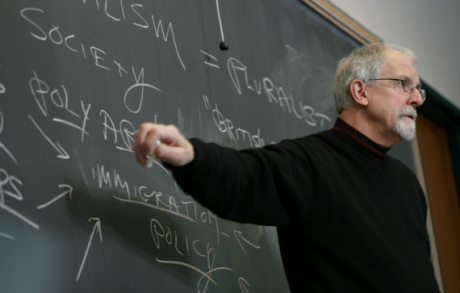 The Rise of A New Production Class In the agricultural world of the first several thousand years of Western culture, there were very clear roles for both kinds of thinking, as I described earlier as the tension between “town and gown.” Then, in the industrializing world of the late 1700s and early 1800s, concrete thinkers came into their own as powerful and important contributors to society. Men whose minds grasped the function and process of mechanics and the interrelationships of mechanical parts, and who were comfortable in a clearly defined organizational structure, became the stars of European and American culture. Those who could translate that understanding into numbers and record-keeping were the new prophets. Those who could combine the two became the new princes – merchant princes. Concrete thinkers creating and producing goods and building structures made the world an exciting place of possibility. And that's how Western culture sustained itself and expanded, well into the 1980s. Then something happened. We call it the Computer Age, the Information Age, the Age of the Internet. Suddenly, building things was not nearly as important as building the abstractions that manage things. Computer software is an abstraction, and computer software has become the way everything gets done. So, for the first time in Western culture, abstract thinking Turtlenecks began to have a significant role in the production system.  The result was a revolution in how we do business – and along with it, huge resentment on the part of the concrete thinking Blue Collar and White Collar workers who find themselves totally left out of the production process – or worse, are relying on equipment they don't understand to do the work they've done without it in the past. The Babyboomer generation, the first generation in human history in which the majority of teens expected to go to college, was the turning point. And a shift from concrete thinking to abstract thinking is the intended result of a college education. The “general education” requirements – usually about four terms of coursework – survey the academic disciplines and, in the process, open the mind to see the world in terms of interrelated, overlapping, and sometimes conflicting, understandings, with no clear boundaries between “right and wrong” or “good and bad”. This, to the concrete thinker, is certainly not an acceptable way to view the world - but is essential for the abstract thinker.  So thousands of Blue/Pink Collar and White Collar kids became Turtlenecks. And their parents (and later, many of their children) were not happy about the change. And, in the conservative talk shows, fundamentalist religious movements, and election of George W Bush, and then Donald Trump, they - and the new generations of concrete thinkers that followed them - made their voices heard.
And now we have a situation. The United States - and all democratic nations - are founded in abstract principles that cannot be explained in concrete terms. Yet concrete thinkers - the Blue/Pink and White Collar classes, along with some Tuxedos - currently hold the power and resent all forms of abstract thought. It will take all the ingenuity, creativity, and love that the Turtlenecks and abstract-thinking Tuxedos can muster to break through before those values are lost by the actions of those who believe they hold them most dear.  I spoke on Sunday in a Unitarian-Universalist fellowhip, having been asked to create a healing process for a congregation that had been actively involved and somewhat split, since before the primaries. Contrary to my usual practice of speaking from Spirit, I wrote out the service. These are the notes I prepared...
Welcome, friends. Welcome to this sanctuary… of community… of healing….of spirituality… and of transformation – for truly in this place we transform lives. You are all welcome here, no matter who you are, what you believe, or what you have experienced this past week. You are all welcome here because as Unitarian Universalists, we honor the worth and dignity of every single person, even when – no, especially when - we don’t fully agree. Because we know that no one person has all the Truth, and so in our search for Truth and Meaning we glean pieces from every one around us. So from the diversity of our experience we gather. And into the common bond of our humanity we join – hoping to find Home. Hoping to find neighbors. Hoping to find solace. And hoping – even against hope – to find that spark of motivation and support that we need to get up and do the work we are called to do: to bind up the broken, to preach the good news, … and to be present with each other in our pain and in our joys; in our fear and in our hopes. We in the program committee created today’s program long before this past week’s election, thinking of a need for healing the bitter divisiveness that has been developing between Americans and between our leaders over the past year and more. During this way-too-long election season, far too many of us have experienced damaged relationships with loved ones, friends, co-workers, or church members, dismay over election results, stress from the bombardment of negative discourse and lies, and fear that the country's divisions will continue or even intensify. Yes, ours is a time of great uncertainty. Thoughtful people everywhere are uneasy about the system of governance in which we have placed our faith and trust to preserve our welfare. We are concerned about the well-being of people living on the margins of our society. We are wondering about our children's future, given the tensions in our society and a world that threatens to erupt in turmoil or violence – even as climate change disrupts the very foundation of our lives. Yet we know that fear does not serve us, or those we care about. We know that fear of the “Other” is a function of our lowest brain – what I call our “bird brain”, which pecks to death a chick that doesn’t look the same. We know that we have a higher mind, the cerebral cortex, from which we can choose to operate, with which we can see our common humanity instead of our apparent differences. So we come together. With fellowships and churches all across the country, we come together as Unitarians, recognizing One Power and Presence throughout the universe and as Universalists, realizing that all beings, everywhere, are included in the Love of that Presence. (even when we don’t agree) In this understanding I invite you now to share… In a few words, if you can, share your current feelings and thoughts about the past 2 years and their culmination this past week, and about what may be emerging. Sharing here (in writing if you can, aloud as you look at this page is fine) allows us to stand witness to and for each other, to speak the truths of our heart in love with each other, to be held in the heart of our community Thank you all… we are, each and every one of us, enriched by your heartfelt sharing - the field of mind that humanity shares is enhanced. I’d like to add some words being spoken this week in other UU congregations, in vigils and special services across the country… Rev Daniel O’Connell of Houston TX: Hold on to what is good & honest & true Find that calm center of yours, hiding behind a door, and Hold on. Despite the noise of bickering & profanity, Hold on to kindness. Despite the whirlwind of potential tragedy Despite the possibility of progress pushed back Hold on. Hold on to this house of memory & hope– as a haven for religious liberals now needed more than ever. Hold on & hold fast, for together we make a beacon of love & hope Together we make a beacon whose light pushes back the darkness Elections come and go, … This too, shall pass. Hold on. Danielle M. Feris, describing herself as a White, Queer and Jewish community organizer in Oakland, tells us We must turn toward each other and open ourselves and share our resources. We must apologize and repair when we make mistakes, and then we must go on together. White supremacy has not won. There are still rivers and sacred prayer circles protecting the water. There is still Black liberation movement, resistance and resilience. There is still love and magic. What will you bring forward now? How can I be supportive of your efforts? What is needed of me and what can I bring more of?” As if in response to that, Monique Bourgeois adapted these words by Judy Bressler of the Klezmer Conservatory Band for her congregation: A candle alone is a small thing. But one candle can light another –and see how its own light increases as it gives flame to another. Light is the power to chase away the darkness, to dissolve it. Throughout history, darkness has tried to smother the light. But always in the end it fails. For always, somewhere in the world, the light remains, Ready to burn its brightest, even where it is darkest. … And when one heart kindles another, When one person strengthens another, When one mind illumines another, The light increases within us as we pass it on With that in mind, seeking the spark of light, the candle within, please write down one thing that gives you hope – it might be a glimmer of possibility, a person, a deeper wisdom ... thank you… [The Meditation]: Now, please close your eyes and feel that hope as reality… seeing, hearing, smelling the experience – bringing all your senses to the imaginary experience of its presence in your life now… allowing it to become a reality to you mind. It is a point of light in the mind-body. Expand that light as loving energy through the mind-body… and into the room… across the town… across the region… up and down the coast… across the continent… the oceans… and spread it around the world. Now in space, look at this beloved earth: one humanity on one planet. Embrace it, feel the light and love and peace pervading it for this instant; and now; and now again. Breathe now, a cleansing breath, and bring awareness back… Breathe again. And now, to help us remember what we stand on and stand for, let us read our 7 principles, listed in your order of service: We covenant to affirm and promote… · The inherent worth and dignity of each person; · Justice equity and compassion in human relations · Acceptance of one another and encouragement to spiritual growth in our congregations · A free and responsible search for truth and meaning · The right of conscience and the use of the democratic process within our congregations and society at large; · The goal of world community with peace, liberty, and justice for all; · Respect for the interdependent web of all existence of which we are a part. Thank you. [click here to watch a video of this presentation.]  There’s so much confusion and confrontation happening in the US and the world today that people are asking me, “What’s going on? What can we learn from history?” Well, the first thing is, this has happened before. This pattern of blustering, angry men raging at the rest of the world because the economic and political power they want isn’t easy to get any more is part of the pattern called “the breakdown of an empire.” The Western Europeans and Americans no longer control the world, economically or politically, and those who’ve benefited from that control are hurting. The US economy is tied to its overseas interests but the US no longer controls those so what was easy a decade or so ago is harder and harder to achieve today. And those men who were accustomed to, or planning on, taking advantage of how things were are angry and upset because their plans no longer work. We can see this in the history of Rome during the 300s, when Constantine vacated Rome and created the Christian church to hold things together for him. We can see this in Cleopatra’s Egypt, when she turned over her once-great country to Caesar rather than have it continue to dissolve into an economic and political backwater. The second thing to be aware of is, whenever a culture shifts from one form to another, there’s a period in which some people flourish and many people suffer – and then the sufferers react against those who are doing well as if they’d somehow caused the problem. We’ve shifted from a culture based on production in heavy industry and 40-hour/week jobs with good benefits to one based on consumption in small, flexible, creative organizations with flexible work schedules and minimum benefits – over only a couple decades. In a mature culture there are ways to address this process – but ours is not at all mature, so we’re seeing pre-adolescent temper tantrums everywhere we look. The third is, actually, something new. We are living in a time period where, for the first time in history, there are more adults than children, more educated than uneducated, and instant access to information for even the most isolated people around the world. This is leading to a new kind of world culture – one in which the outer world serves the inner life, rather than the other way around; one in which ignorance is no longer the norm, and in which human creativity can soar. This worldwide shift is leading to a new kind of global culture, based on sharing information, creative problem-solving, and maximizing potential. So, not only is the empire breaking down – with all the issues that go with that; not only is a great shift in culture happening – with all the fabulous opportunities and great suffering that go with that; but a whole new level of human functioning is emerging across the planet, with all the angst that goes with anticipating anything unknown and unfamiliar.  So, what do we do?
Now is a great opportunity to organize our lives in a way that what goes on around us has the least possible impact. Now is a fabulous time to reflect, meditate, contemplate, and study whatever ideas and processes we find deeply satisfying to our hearts, minds, and souls, so that we no longer look outside us for that satisfaction. Now is the perfect time to imagine, visualize, and begin to choose in the direction of a life that is filled with joy and love and satisfaction for all beings on this planet – because that’s what all this chaotic transformation process is leading up to! Letting go of what no longer serves us to make room for a wonderful new life is the most powerful thing any of us can do today – and one thing that no longer serves us is accepting what the commercial, drama-driven media is trying to convince us is real. Let it go. Trust your own ability to find out what you need to know, and what will move you toward the life you’ve longed for all your years on this planet. For every ugly story they focus on there's hundreds of beautiful unfoldings in peoples' lives and hearts and homes. For every time the media twists a number to convince people things are not okay, there's more evidence that things are improving and fabulous possibilities are opening up for us. For every second of paid advertising time trying to convince us there's more stuff we need to have to be okay, there's hours of loving wisdom being made available to the listening mind. Choose that. Open up to it; allow it; feel the New Heaven and New Earth merge together in your life and world. That’s what’s happening. Isn't it awesome? |
Categories
All

The mandala image above is one that Ruth made and updates periodically.
Click on it to enlarge it. Right click on the enlarged image to copy it. Archives
February 2026
CLICK ON THE RSS feed button BELOW to have Ruth's Postings sent to your email:
CLICK HERE to view a range of YouTube videos featuring Ruth and her teachings. CLICK HERE to view talks she's given at Portland CSL CLICK HERE to view talks she's given at Ocean Unity. And CLICK HERE to access some of the talks she's given at the Florence Unitarian Universalist Fellowship. Here's some GOOD NEWS from around the world:
|
 RSS Feed